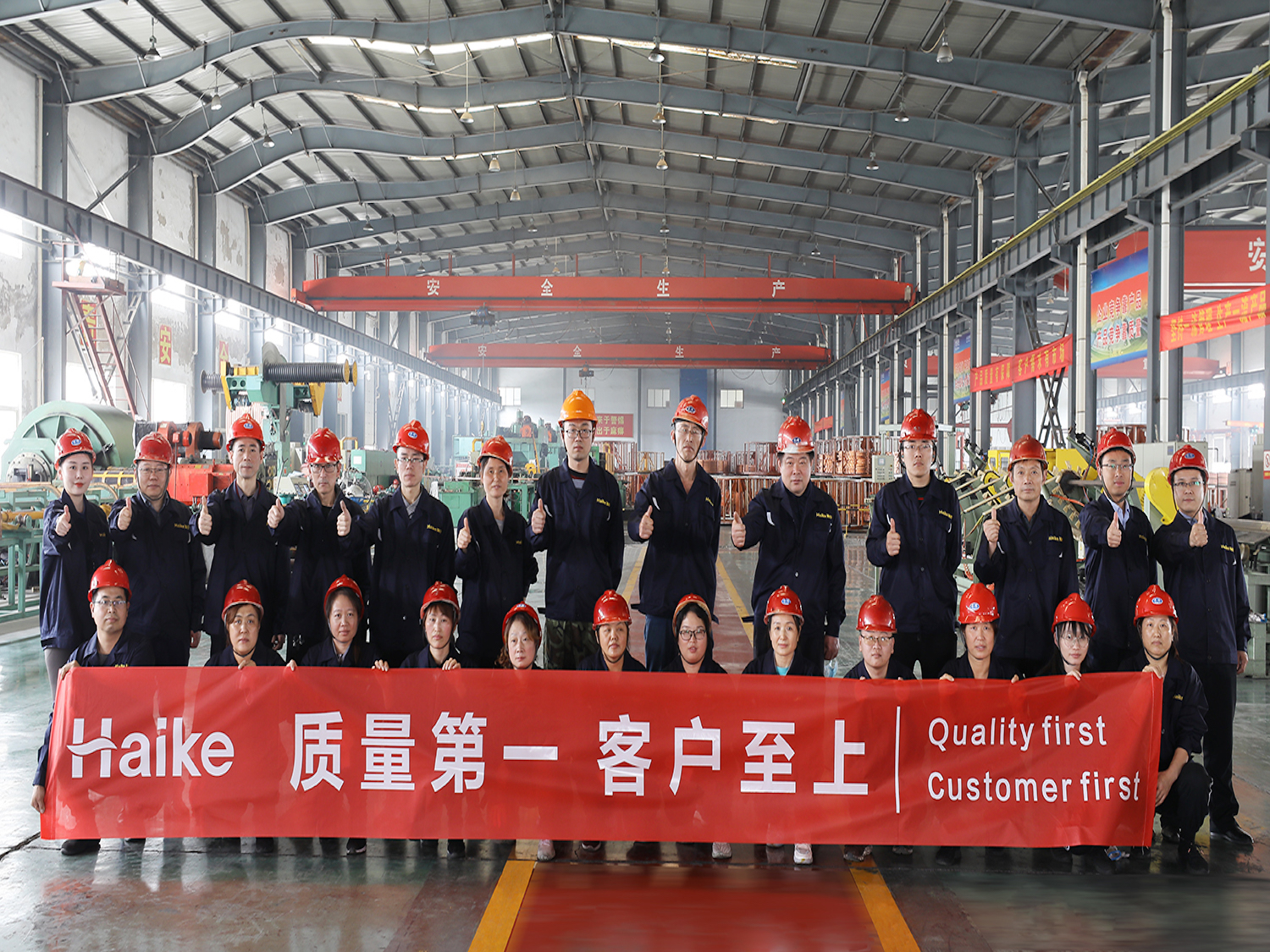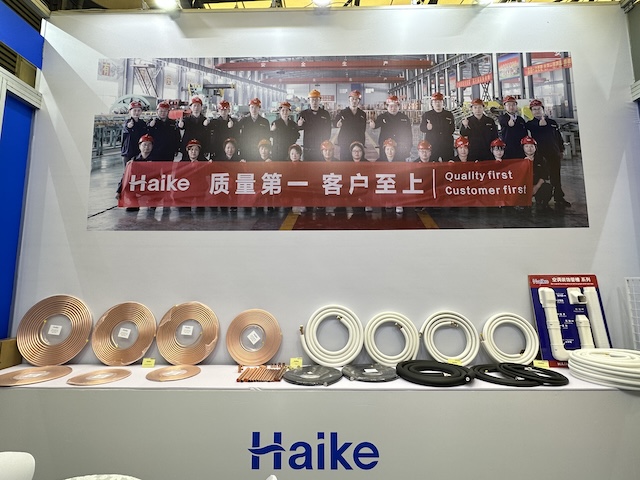
As fingertips brushed against the workshop's cool metal railings, the steady hum of machinery filled the air. A blend of metallic luster and industrial warmth enveloped us—this was the magic workshop of copper tube manufacturing, the core facility where electrolytic copper billets were forged into industrial' blood vessels. 'Driven by curiosity and reverence for precision engineering, we embarked on this in-depth study journey from' copper ingot to finished product,' witnessing how a single piece of copper material, empowered by both craftsmanship and technology, transforms into a critical material that fuels countless industries.
Stepping into the smelting workshop, the colossal continuous casting furnace roars at a thousand degrees, embodying the ancient Chinese adage 'hundreds of temperings forge steel.' In the furnace, pre-treated electrolytic copper and recycled copper materials melt into scorching molten copper, its orange-red flame illuminating the workers 'focused expressions.' The temperature must be precisely maintained above 1083°C, with nitrogen gas shielding to prevent oxidation, ensuring the purity of the molten copper,' the technician explained, revealing how every high-quality copper tube stems from relentless pursuit of raw material purity and smelting parameters. As the molten copper flows slowly through the guide channel into the mold, cooling into a well-defined copper tube blank, we witness the birthplace of industrial civilization—the perfect fusion of fire and metal.
If smelting is the soul of copper tubes, then rolling and drawing are the key to shaping their framework. On automated production lines, thick copper blanks undergo repeated rolling in rolling mills, gradually becoming thinner and more uniform. They are then precisely stretched through dies of varying specifications under the tension of drawing machines, with diameter and wall thickness controlled within micron-level tolerances. "This process is like 'slimming down' copper tubes," explained the workshop director, pointing to the high-speed equipment. "It requires precise control of drawing speed and force, along with real-time lubrication and cooling to prevent stress cracks." After multiple drawing processes, the originally bulky copper blanks transform into smooth, straight tubes with remarkable ductility and dimensional accuracy.
The copper tube, bearing machining stresses after drawing, requires annealing as the critical step to release its potential. In an oxygen-free annealing furnace, the tube undergoes heating, holding, and slow cooling, during which its internal crystal structure reorganizes, significantly enhancing plasticity and toughness. After leaving the annealing furnace, the tube must undergo finishing processes including pickling, polishing, and straightening: pickling removes surface oxide scales, polishing achieves mirror-smooth tube walls, and straightening ensures straightness error within 0.1mm. Quality inspection is exceptionally rigorous, with each tube undergoing over ten tests ranging from dimensional measurement and appearance inspection to chemical composition analysis and mechanical property testing. Only those with a 100% pass rate can enter the finished product warehouse.
At the final stop of our tour, we explored the full spectrum of copper's applications in the exhibition hall. From heat exchange pipes in refrigeration systems to high-voltage power conductors, from fluid delivery pipelines in chemical plants to battery cooling systems in new energy vehicles, and even precision hydraulic tubes in aerospace, copper has become an indispensable core material across industries, thanks to its exceptional electrical and thermal conductivity as well as corrosion resistance. "The air conditioners in your home, medical equipment in hospitals, and braking systems in high-speed trains may all rely on the copper tubes we produce," the guide explained, highlighting how these seemingly ordinary tubes actually serve as the "invisible backbone" supporting industrial progress.
Stepping out of the factory, the roaring machinery and the metallic sheen of copper pipes from the workshop remain vivid in our memory. This visit not only provided us with a firsthand understanding of the complete copper pipe production process from raw materials to finished products, but also allowed us to experience the craftsmanship spirit of "pursuing excellence" in manufacturing. From the strict control of raw material selection to the precise regulation of production processes, and through the rigorous quality inspections at every stage, each step embodies the wisdom and hard work of technical personnel. Meanwhile, the widespread application of automated production lines and intelligent inspection equipment has also revealed the powerful momentum of digital transformation in traditional manufacturing.
A piece of copper undergoes dozens of processes—from smelting and rolling to drawing, annealing, finishing, and quality inspection—before becoming a finished product. Much like our learning journey, it requires accumulation, refinement, and sedimentation to achieve growth and transformation. This study tour to the copper tube factory is not only an introduction to industrial knowledge but also a spiritual baptism of craftsmanship and innovation. Moving forward, we will carry this reverence for precision manufacturing and pursue excellence with a rigorous and pragmatic attitude, writing our own "tempering" chapters in our respective fields.
info@haikechina.com
(86) 532 6773 8936
(86) 532 6773 8934
31, Longcheng Road, Shibei District, Qingdao Ctiy, Shandong Province, China
ZHEJIANG BRANCH:
ZHEJIANG HAIKE METAL MATERIALS CO.,LTD
ADDRESS:Shangyu district,Shaoxing city,Zhejiang,China